
1-805-484-2992
Quotes - Sizing - SalesOverview
Controlled-environment agriculture runs on holding a narrow temperature band around the crop, day and night, through every season outside.
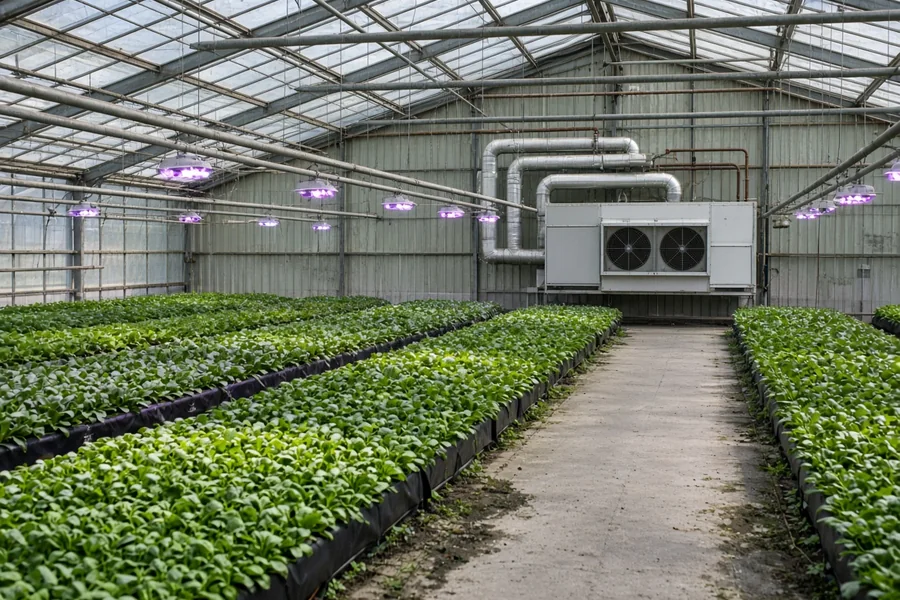
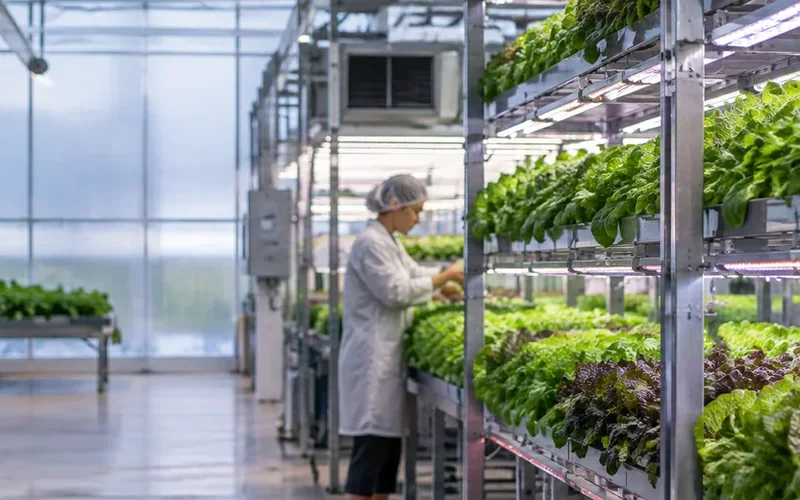
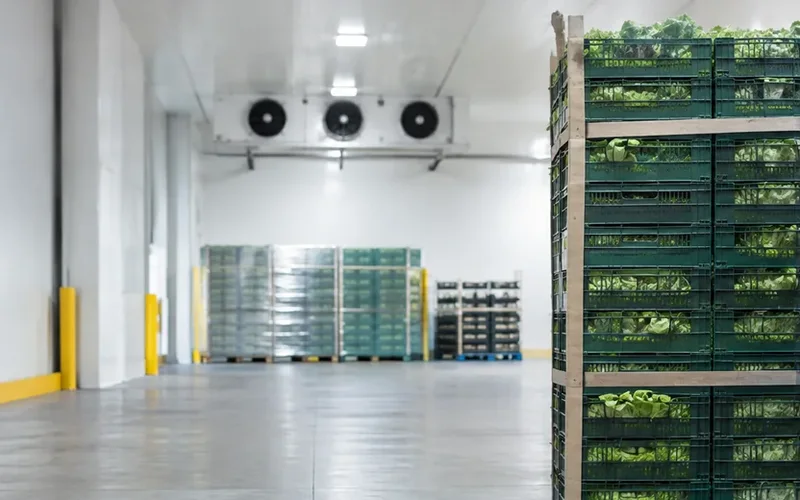
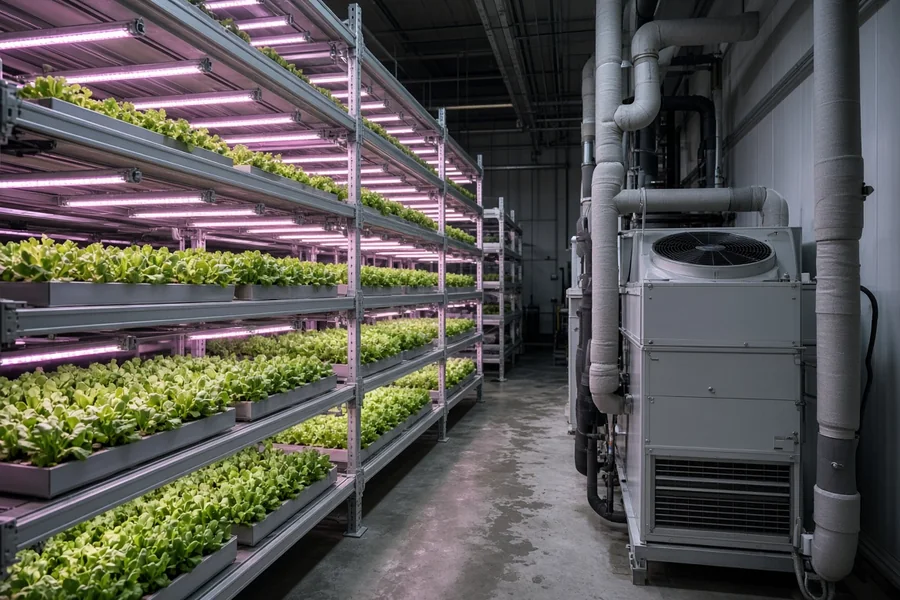
Greenhouses, indoor vertical farms and post-harvest storage all depend on holding a crop-specific temperature range that has very little to do with the outdoor weather - a greenhouse fan-coil loop, a vertical farm's tightly sealed grow room, and a cold-storage room after harvest are each fighting a different heat source, but all three need a chiller sized for their actual load, not a generic HVAC estimate.
Glycol is the standard fluid on most of these loops because supply temperatures often run cold enough that plain water risks freezing in the coil or in the chiller's own heat exchanger, especially on systems that see cold nights or run near-freezing storage setpoints.
COMMON APPLICATIONS
Which Application Matches Yours?
Pick the operation below that's closest to yours, or send us the grow area or storage volume and target temperature directly - controlled-environment agriculture sizing comes down to real heat load and setpoint, not square footage alone.
- Greenhouse & Vertical Farm Cooling - fan-coil and grow-room cooling for controlled-environment agriculture
- Post-Harvest & Cold Storage Cooling - rapid cooldown and holding temperature after harvest
What Makes Agricultural Cooling Different
Load driver
Lighting + Sun
Two Heat Sources, One Loop
A greenhouse's load swings with solar gain through the glazing; a sealed vertical farm's load comes almost entirely from grow lighting and equipment. Both land on the same fan-coil or grow-room loop, sized for peak simultaneous heat rather than a seasonal average.
Setpoint
Crop-Specific
No Generic HVAC Number
A leafy-green vertical farm and a cut-flower greenhouse do not share a target range. The chiller's leaving fluid temperature is set from the crop's own tolerance, not a standard comfort-cooling setpoint pulled from an HVAC table.
Duty cycle
Day/Night Swing
Sized For The Peak
Solar gain and lighting cycles both create hard swings between day and night load - a system sized off the daily average runs out of capacity on the hottest, sunniest stretch of the grow cycle, exactly when the crop can least afford it.
Fluid
Freeze-Protected
Outdoor & Cold-Night Ready
Many greenhouse and cold-storage loops run outdoors or in unconditioned equipment rooms that see freezing nights even in a mild climate. A properly mixed glycol loop is what keeps the chiller's own heat exchanger from freezing solid on the coldest night of the year.
Sizing an Agriculture & Greenhouse Loop
Three numbers move a quote fastest: the grow area or storage volume, the target fluid temperature the crop or produce needs, and whether the chiller sits outdoors on a pad or indoors in an equipment room. Everything else - glycol percentage, pump/reservoir sizing, cabinet construction - follows from those three.
Most single-greenhouse or single-room vertical farm duty fits a portable chiller through roughly 40 tons; a multi-bay operation or a combined grow-and-storage load typicaly lands in the 40 to 100 or 100 to 210 ton range. Above that, a modular or custom system is worth a direct conversation with an application specialist.
Send Us
- Grow area (sq ft) or storage volume
- Target leaving fluid temperature
- Indoor or outdoor installation
- Available voltage
- Which application below matches your operation
DIG DEEPER BY APPLICATION
Greenhouse & Vertical Farm Cooling
Fan-coil and grow-room cooling for controlled-environment agriculture.
Learn More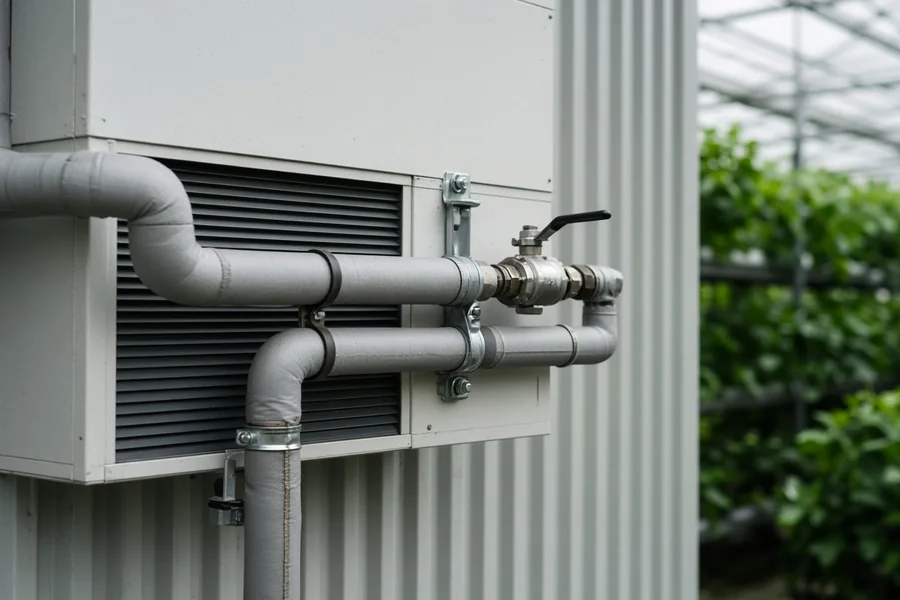
Post-Harvest & Cold Storage Cooling
Rapid cooldown and holding temperature for produce after harvest.
Learn More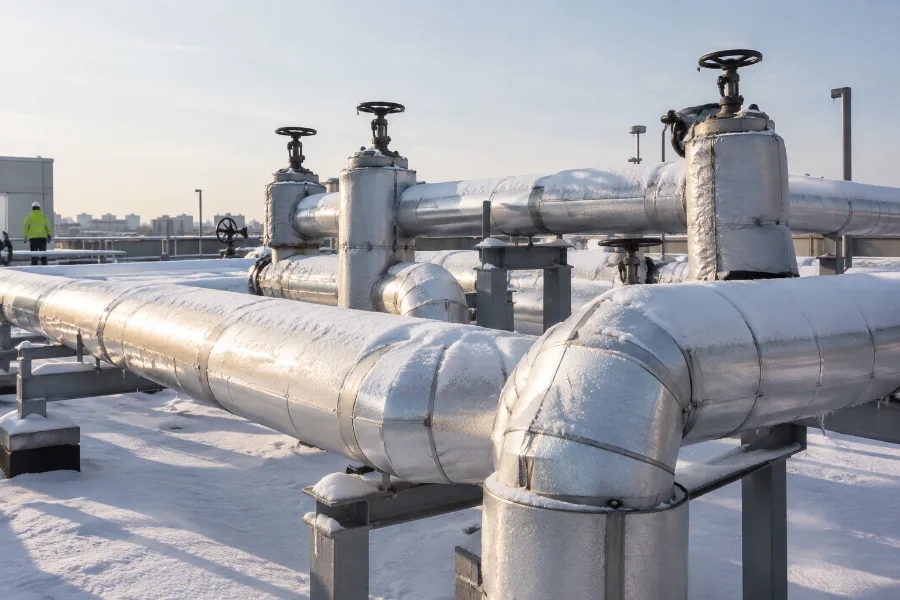
Outdoor & Cold-Climate Chillers
Freeze protection, snow-melt, ice rinks and rooftop cooling.
Learn More