
1-805-484-2992
Quotes - Sizing - SalesOverview
An ice rink slab is a continuous, precisely held cooling load - the glycol loop under the ice has to hold its setpoint through every skate session and resurfacing.
An ice rink slab runs on a glycol loop circulated through piping embedded in the slab itself, holding the ice at a consistent temperature through resurfacing cycles, changing occupancy, and whatever heat load the building above adds. Because the slab is a large thermal mass, the loop's job is steady-state holding more than fast response - but it still has to be sized for the coldest ice condition the facility wants to offer, not just an average.
Outdoor cold storage - a refrigerated building or container living outside rather than inside a conditioned plant - shares the same core requirement as a rink: a glycol loop that keeps working across the outdoor ambient range the site actually sees, summer and winter both, without the swings in ambient temperature showing up as swings in storage temperature.
Both applications typically call for a central or add-on packaged outdoor glycol system rather than a portable unit, since the loads are continuous and the equipment is expected to be a long-term, largely unattended installation.
- Rink slab cooling is a steady-state load sized to the coldest ice condition offered
- Outdoor cold storage needs to hold setpoint across the full outdoor ambient range
- Both duties commonly favor central or add-on packaged systems over portables
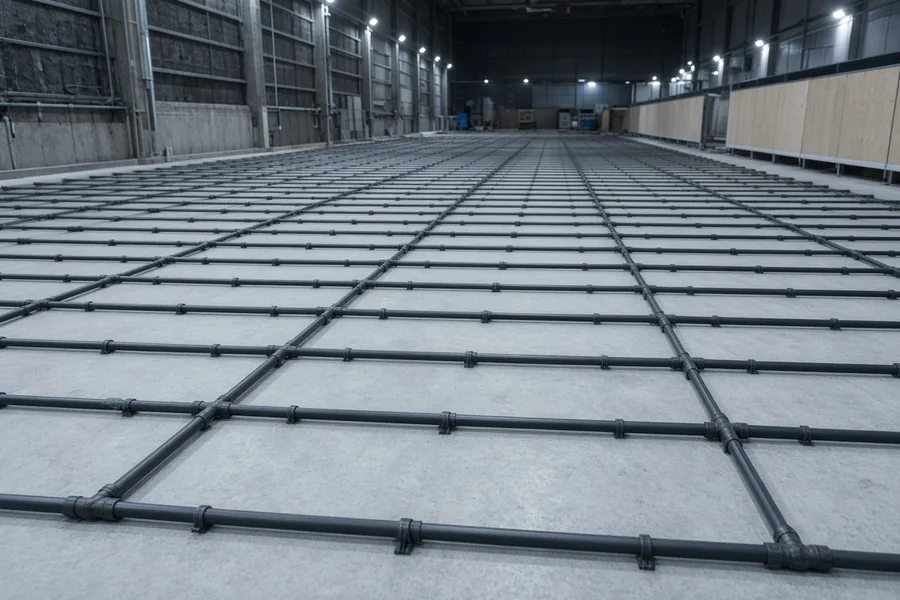
Sizing Ice Rink & Outdoor Cold Storage Cooling
Rink slab load is driven by slab area, ambient conditions (indoor vs. outdoor rink) and resurfacing frequency, since each resurfacing adds a fresh thermal load the loop has to pull back down before the next skate session. Outdoor cold storage is a steadier, continuous load closer to standard cold storage sizing, but with an outdoor-rated cabinet. These chillers hold leaving fluid down to about 20°F; a sheet that needs colder brine than that is outside the line and gets a separate rating.
Rink glycol loops run continuously through the season rather than cycling, so the chiller is sized for sustained full-load operation at the slab's target temperature, not a peak-and-idle pattern.
Send Us
- Rink slab area or cold storage room volume
- Indoor or outdoor rink/storage
- Resurfacing frequency, if applicable
- Target slab or storage temperature
TYPICAL RANGES BY APPLICATION
| Application | Leaving Fluid Temp | Load Profile | Typical Glycol Mix |
|---|---|---|---|
| Ice rink slab | 20-24°F | Continuous, full-load | 35-45% propylene |
| Outdoor cold storage | 20-35°F | Continuous, flat | 30-40% propylene |
Ranges are typical starting points, not a substitute for a load calculation - actual leaving fluid temperature and glycol percentage depend on your slab construction, climate and use pattern.
Call and talk it through with an engineer: 1-805-484-2992.