
1-805-484-2992
Quotes - Sizing - SalesOverview
Not every process load fits a named industry - compressors, hydraulic systems and jacketed equipment across every kind of plant run on the same fluid-cooling fundamentals.
A lot of process cooling doesn't belong to one named industry - a compressor rejecting heat from compressing air, a hydraulic power unit holding oil temperature, a machine or tank jacket removing process heat from equipment that could be in a dozen different kinds of plants. These loads share the same sizing fundamentals regardless of what industry they sit in: know the heat rejection rate, know the required fluid temperature, and size the chiller and loop to match.
Glycol is common on this equipment even when the process itself doesn't strictly require sub-freezing protection, simply because a chiller's own heat exchanger can see localized temperatures cold enough to risk freeze-up on a straight water loop, and because glycol loops tolerate outdoor or unconditioned equipment-room installation better than water does.
COMMON APPLICATIONS
Which Application Matches Yours?
Pick the equipment type below that's closest to yours, or send us the heat rejection rate and required fluid temperature directly - general process cooling sizing comes down to those two numbers more than the name of the industry around them.
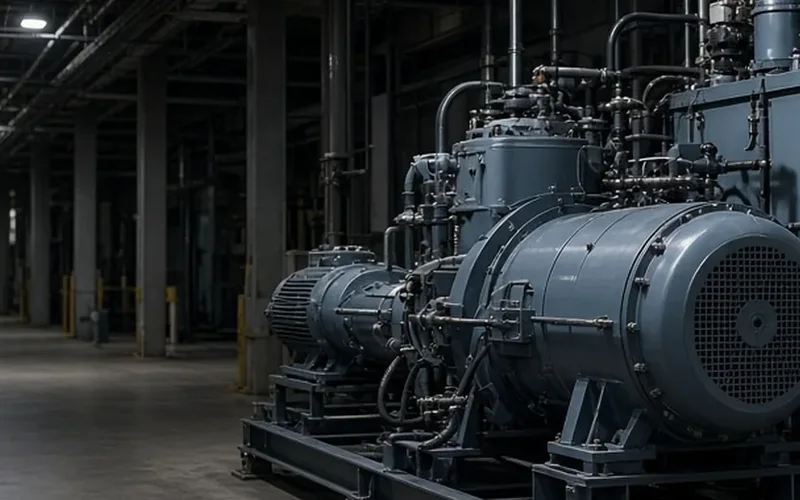
- Compressor & Hydraulic Oil Cooling - air compressor aftercooling and hydraulic power unit oil cooling
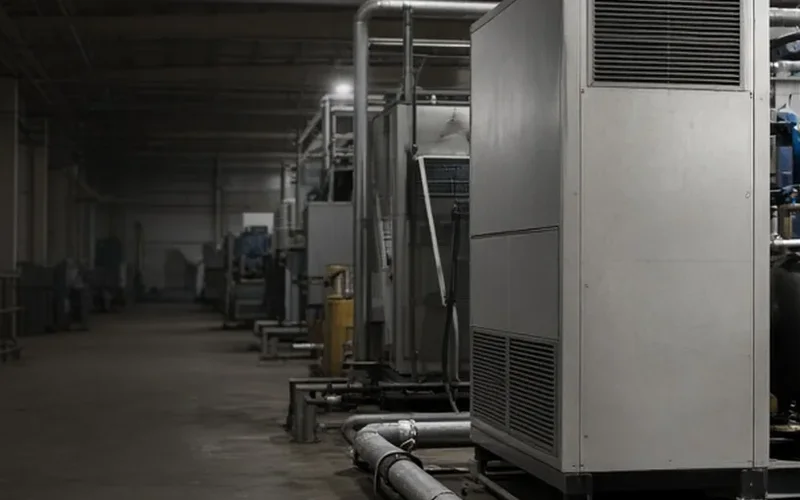
- Machine & Tank Jacket Cooling - jacketed process equipment and machine-tool cooling
What Makes General Process Cooling Different
Fluid role
Not Product-Contact
Industrial Ethylene, Usually
Compressor, hydraulic and machine-tool loops almost never touch product, so industrial ethylene glycol - cheaper and more efficient than the food-grade propylene mix used on food/beverage duty - is the standard choice unless the equipment sits in a food-contact-risk area.
Load type
Continuous, Steady
Runs With The Equipment
Compressor and hydraulic cooling loads track equipment runtime almost directly - a steadier, more predictable load than a batch process, which makes sizing straightforward once you know duty cycle and rated heat rejection.
Install
Anywhere In The Plant
No Single Named Industry
This equipment shows up across every kind of facility, so installation constraints - equipment room space, condenser water availability, indoor vs. outdoor - matter more to the selection than which industry the plant is in.
Risk
Freeze Protection First
Even Without A Cold Process
A glycol loop here is often chosen for freeze protection of the chiller's own heat exchanger and outdoor-run piping, not because the process itself needs sub-freezing temperatures - a common point of confusion worth flagging when you call.
Sizing a General Process Cooling Loop
Three numbers get a quote moving fast: the equipment's rated heat rejection (often on its own nameplate or spec sheet), the required leaving fluid temperature, and wether the unit sits indoors near the equipment or outdoors on a pad. Everything else - glycol percentage, pump/reservoir sizing, indoor vs. outdoor cabinet - follows from those three.
Most single-machine or single-compressor duty fits a portable chiller through roughly 40 tons; a plant running several process points off one loop typicaly lands in the 40 to 100 or 100 to 210 ton range. Above that, a modular or custom system is the right conversation to have with an application specialist.
Send Us
- Equipment's rated heat rejection (BTU/hr or tons)
- Required leaving fluid temperature
- Indoor or outdoor installation
- Available voltage
- Which application below matches your equipment
DIG DEEPER BY APPLICATION
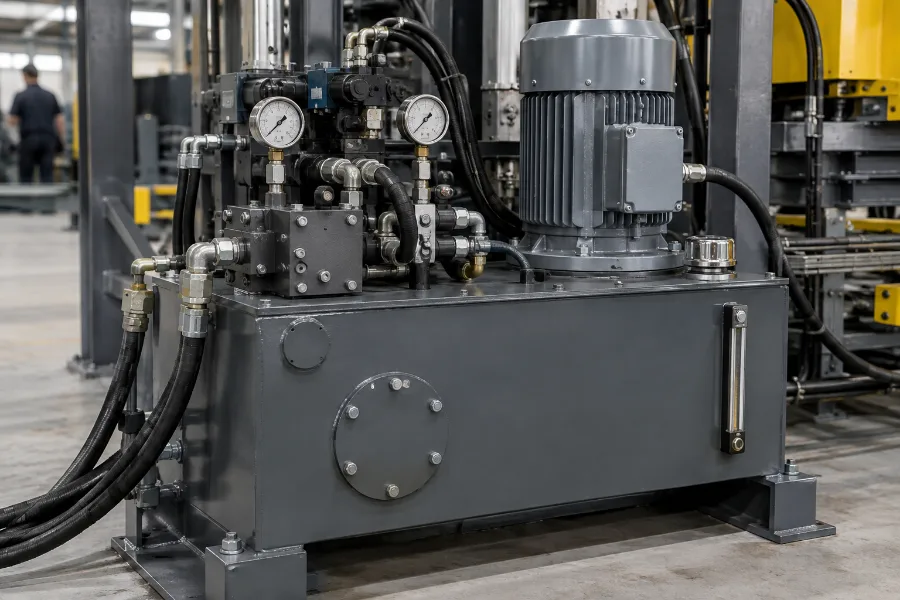
Compressor & Hydraulic Oil Cooling
Air compressor and hydraulic power unit cooling to hold rated operating temperature.
Learn More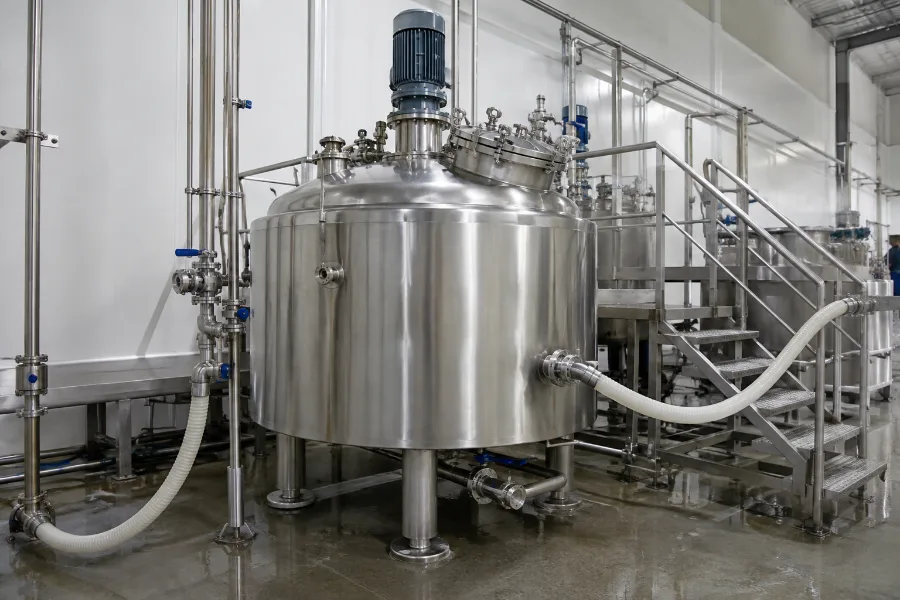
Machine & Tank Jacket Cooling
Machine-tool and jacketed vessel process cooling to hold setpoint.
Learn More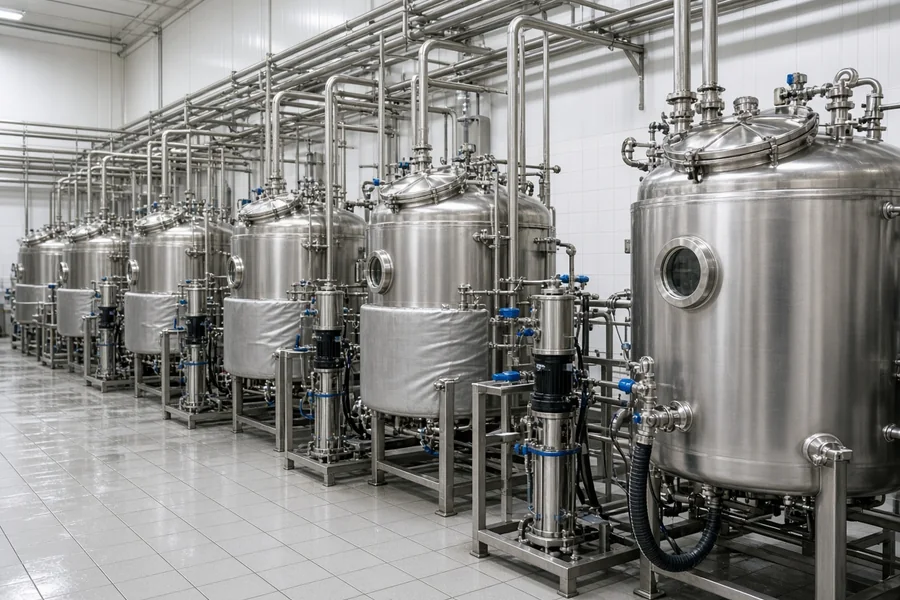
Dairy, Bakery & Food Manufacturing Chillers
Processing, storage and line cooling for food plants.
Learn More