1-805-484-2992
Quotes - Sizing - SalesOverview
Not every data center runs on a permanent central plant - modular, edge and temporary deployments need cooling that scales and moves with the equipment.
Large enterprise data centers typically run permanent central water-chiller plants sized for a fixed facility - that's a different scope from a modular or edge deployment, an existing room outgrowing its cooling, or a facility that needs temporary capacity while a primary system is serviced or expanded. A packaged outdoor glycol chiller sized for the actual rack or room heat load gives these deployments cooling capacity that can scale, relocate, or install fast without the footprint and lead time of a central plant.
Server electronics run within specific temperature and humidity tolerances, and glycol loops give a stable, lower supply temperature than many building chilled-water systems can guarantee at the edge of their distribution, which matters most for a small or remote installation that isn't sitting next to the main plant.

COMMON APPLICATIONS

Which Situation Matches Yours?
Pick the situation below that's closest to yours, or send us the rack heat load and required supply temperature directly - modular, edge and temporary data center cooling is almost always sized from IT heat load (kW) rather than square footage.
- Modular & Edge Data Center Cooling - packaged outdoor cooling for containerized or edge-site deployments
- Temporary & Emergency Server Room Cooling - short-notice bridge cooling during an outage, expansion or repair
What Makes Data Center Cooling Different
Load unit
kW, Not Tons Alone
Sized To The Rack
Data center cooling is specified against rack heat load in kilowatts as much as tonnage - the chiller has to match the IT load exactly, with headroom for planned expansion, not a rounded-up building estimate.
Uptime
N+1 Expectation
No Single Point of Failure
Even a temporary or modular deployment is usually expected to run with a level of redundancy, because a cooling failure in a data center escalates from an efficiency problem to an equipment-damage and downtime problem in minutes.
Footprint
Containerized / Skid
Deploys With The IT Gear
Modular and edge sites need a chiller package that ships, sites and connects on the same timeline as the containerized or skid-mounted IT equipment it serves - not a custom central-plant buildout.
Response
Rapid Deployment
Staged For Emergencies
Temporary and emergency cooling needs equipment that can be staged, delivered and running within days, not the lead time of a permanent system, for a planned outage, an equipment room expansion or an unplanned cooling failure.
Sizing Data Center & Facilities Cooling
Three numbers get a quote moving fast: total rack or IT load in kilowatts, the required supply/return fluid temperature for the cooling distribution equipment, and whether the unit deploys outdoors beside a container or module, or indoors as bridge cooling. Everything else - redundancy configuration, glycol percentage, footprint - follows from those three.
Most modular, edge or temporary deployments fit a portable or small packaged chiller through roughly 40 tons; a larger modular buildout or a combined multi-container site typically lands in the 40 to 100 or 100 to 210 ton range. Above that, a modular/custom multi-unit system is the right conversation to have with an application specialist.
Send Us
- Total IT/rack load (kW or tons)
- Required supply/return fluid temperature
- Redundancy requirement (N, N+1)
- Indoor bridge cooling or outdoor containerized/skid
- Which application below matches your deployment
DIG DEEPER BY APPLICATION
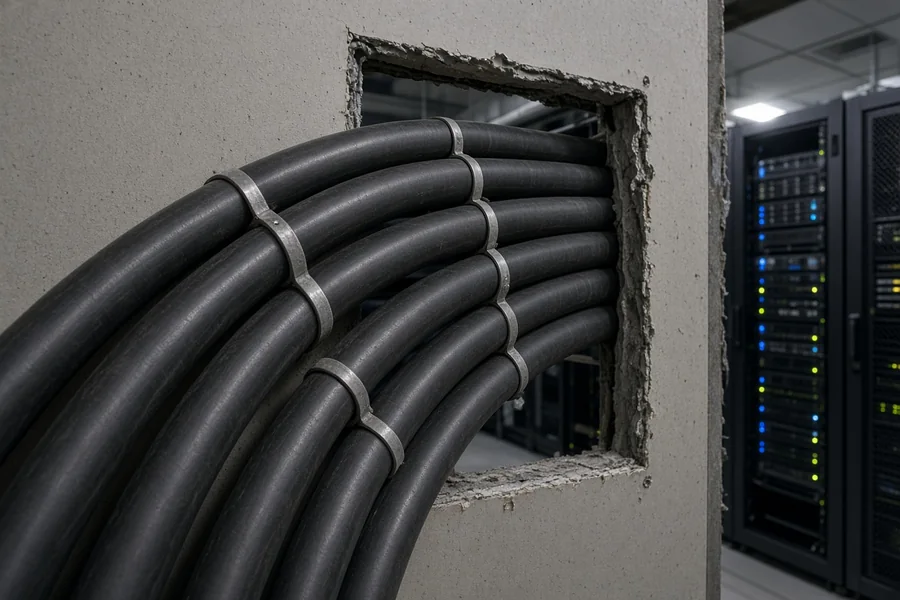
Modular & Edge Data Center Cooling
Packaged outdoor cooling matched to containerized and edge rack loads.
Learn More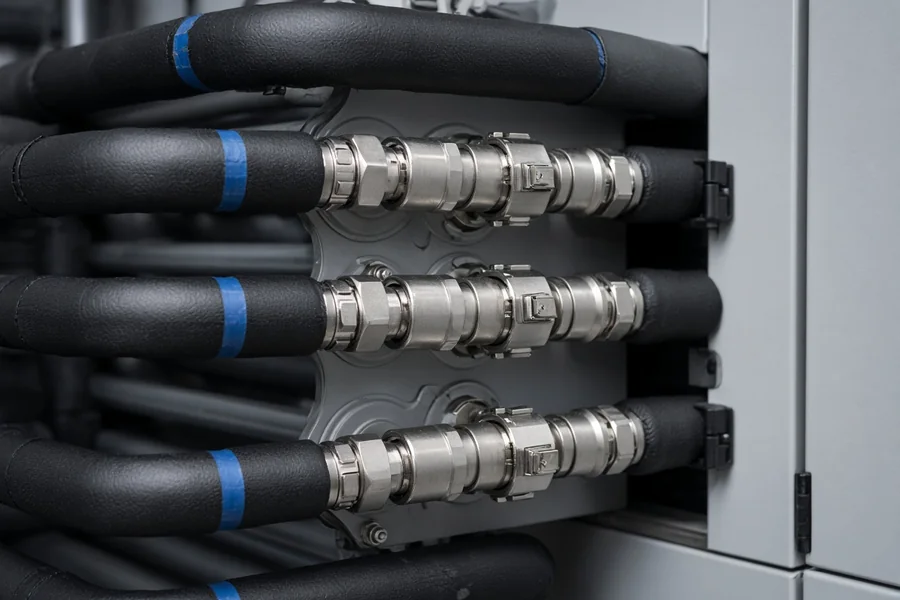
Temporary & Emergency Server Room Cooling
Short-notice bridge cooling for server and equipment rooms during an outage or repair.
Learn More