
1-805-484-2992
Quotes - Sizing - SalesOverview
Crush season concentrates a winery's entire annual cooling demand into a few intense weeks, and the loop has to be sized for that peak, not the rest of the year.
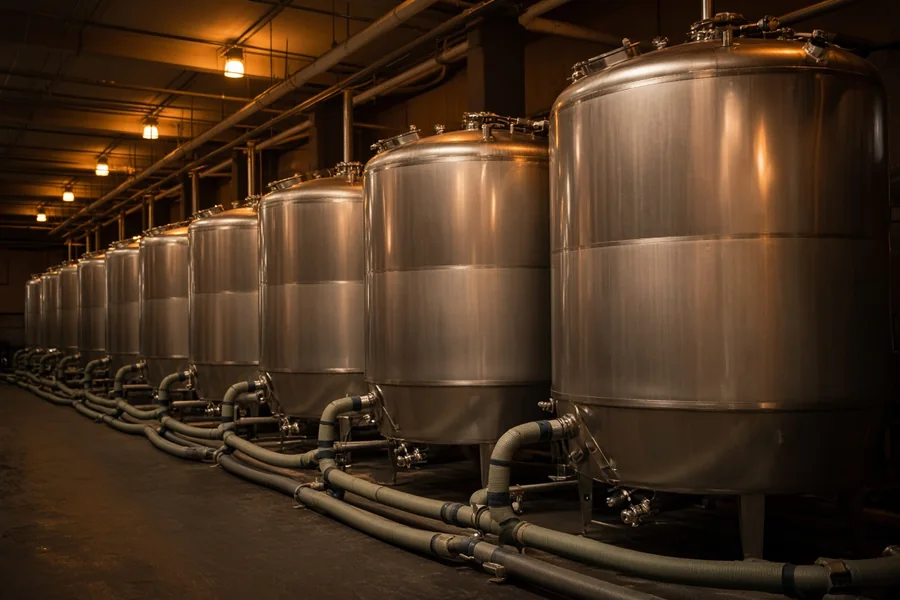
Red wine fermentation, like beer fermentation, is exothermic, and an uncontrolled must can run well past the temperature range that protects color, tannin extraction and aromatics. A glycol jacket on the fermentation tank holds the must in range through active fermentation, and the same loop typically handles cold soak before fermentation and cold stabilization afterward, each at a different setpoint.
Crush season compresses a winery's entire annual cooling demand into a few weeks, and tank count during that window can be several times what's in use the rest of the year. That means the glycol loop has to be sized against peak crush-season load, not an average across the year - undersizing here shows up as a stuck or overheated fermentation at the worst possible time.
A portable or add-on packaged glycol chiller lets a winery add capacity for crush season without carrying that tonnage idle the rest of the year, which is a real cost consideration most permanent central systems don't offer.
- Jacketed tank cooling protects color, tannin extraction and aromatics during active ferment
- Cold soak and cold stabilization run off the same loop at different setpoints
- Peak crush-season tank count, not annual average, sizes the system
Sizing Winery Fermentation Cooling
Crush season load is set by how many tanks are fermenting or cold-soaking at once, not your total tank count for the year - a winery with thirty tanks rarely runs all thirty at peak simultaneous demand. The realistic worst-case overlap during the busiest week of crush is what should size the chiller.
White and rose musts ferment cooler, so their tanks want colder fluid, while red fermentation and cold soak put the heavier peak load on the loop; a winery producing both should size against whichever varietal mix creates the heaviest simultaneous demand at the coldest setpoint it must hold, not an average across the whole crush.
Send Us
- Tank count and volume
- Typical amount of tanks fermenting simultaneously at peak
- Target fermentation and cold-soak temperatures
- Red, white or mixed varietal program
TYPICAL RANGES BY DUTY
| Duty | Leaving Fluid Temp | Load Profile | Typical Glycol Mix |
|---|---|---|---|
| Red fermentation / cap management | 50-60°F | Batch, high peak during crush | 15-20% propylene |
| Cold soak | 35-45°F | Batch, short high peak | 25-30% propylene |
| White / rose fermentation | 45-55°F | Batch, moderate | 20-25% propylene |
Ranges are typical starting points, not a substitute for a load calculation - actual leaving fluid temperature and glycol percentage depend on your varietal mix and crush-week tank schedule.
Call and talk it through with an engineer: 1-805-484-2992.