
1-805-484-2992
Quotes - Sizing - SalesOverview
A critical medical space can't simply go without cooling for the length of a chiller repair or a planned electrical shutdown - a staged portable unit bridges the gap.
When a central chiller plant goes down unexpectedly, or a facility needs to take a system offline for planned electrical or mechanical work, spaces that depend on tight temperature control - server and equipment rooms serving medical operations, pharmacy cold storage, or imaging suites - can't simply wait out the repair. A portable or outdoor packaged glycol chiller staged and connected as a temporary bridge keeps those spaces within their required range until the primary system is back online.
Because this is an emergency or short-notice application, the practical sizing question is usually simpler than a new installation: match the temporary unit's capacity and supply temperature to what the space's existing system was already delivering, using whatever load data the facility has on hand, and configure hose or quick-connect hookups that a facilities team can get running fast.
A facility that identifies this as a real risk - an aging chiller plant, a planned utility shutdown on the calendar - is often better served by having a standby unit and connection plan arranged in advance rather than sourcing one for the first time mid-emergency.
- Temporary bridge cooling matches the space's existing system output, not a fresh load calculation
- Quick hose or connection hookups matter as much as raw capacity in an emergency deployment
- Facilities with known risk (aging plant, planned shutdown) benefit from arranging standby capacity in advance
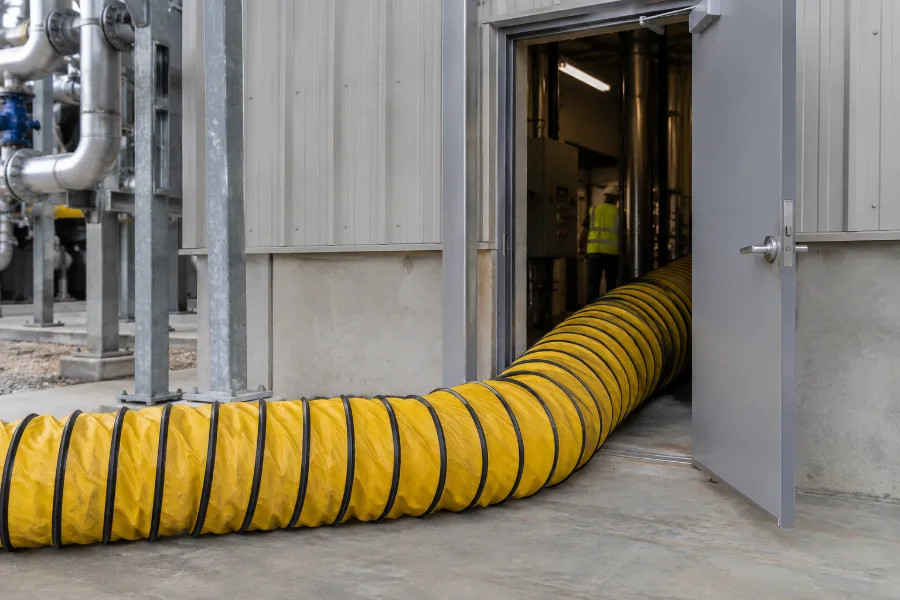
Sizing Emergency & Backup Cooling
The room's existing chiller nameplate tonnage is the fastest number to work from - a staged bridge unit matched to that figure protects equipment through a planned outage or an unplanned failure without a full load recalculation under time pressure.
Connection method needs confirming as early as possible: whether the staged unit ties in to existing piping directly, or portable air-handling accompanies it, is often what determines how quickly the bridge can actually go live once it's on site.
Send Us
- Existing chiller tonnage or room cooling load
- How long the bridge cooling is needed
- Where it connects: into existing piping, or through portable air handling
- Site access and available voltage
TYPICAL RANGES BY SCENARIO
| Scenario | Leaving Fluid Temp | Load Profile | Typical Glycol Mix |
|---|---|---|---|
| Planned outage / chiller swap bridge | 42-50°F | Continuous, matched to existing unit | 20-30% propylene |
| Unplanned emergency failure | 42-50°F | Continuous, room-load driven | 20-30% propylene |
Ranges are typical starting points, not a substitute for a load calculation - actual leaving fluid temperature and glycol percentage depend on your existing system's setpoint and room load.
Call and talk it through with an engineer: 1-805-484-2992.