
1-805-484-2992
Quotes - Sizing - SalesOverview
Two ways to find the right replacement: match your existing unit by manufacturer and model, or size a new one from your actual process requirements.
If you know the manufacturer and model of the unit you're replacing, that's the fastest way to identify a compatible or equivalent replacement - our lookup covers the major competitor chiller brands so you can match capacity and configuration without starting from zero. If you don't have that information handy, or you'd rather size a fresh unit against your actual current process requirements, the Replacement Sizing Guide walks through that instead.
Either path gets you to the same place - a rating you can request a quote against - so use whichever one matches the information you have in hand.
COMMON APPLICATIONS

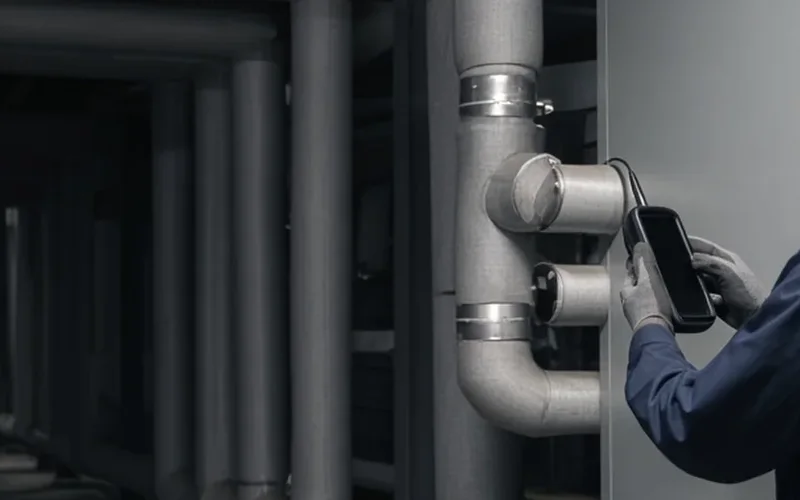
A nameplate photo or three process numbers.
- A phone photo of the data tag is usually the quickest route to an equivalent.
- Model lines get renamed, so we match capacity, configuration and install type.
- With no tag: heat load, leaving fluid temperature and indoor or outdoor install.
Not Sure Which to Use?
If you have a model number or nameplate photo, start with the manufacturer lookup - it's usually faster. If the old unit's data plate is long gone or illegible, the Replacement Sizing Guide gets you to the same answer from your process numbers instead.
- Look Up by Manufacturer & Model - find an equivalent by matching your existing unit's brand and model
- Replacement Sizing Guide - size a replacement from your actual current heat load and requirements
What Gets You to a Rating Fastest
Data Tag
Nameplate First
Read It Before You Call
Most units carry a nameplate with manufacturer, model number and often tonnage or refrigerant type stamped on it. A phone photo of that tag, sent to us directly, is usually the single fastest path to an equivalent match.
Capacity
Equivalent, Not Identical
Match On What Matters
Manufacturers discontinue and rename model lines constantly, so an exact model-for-model match often isn't available. Matching capacity, configuration and installation type gets you a functionally equivalent - and often better - replacement.
No Nameplate?
Size From Today
Your Process Numbers Work Too
If the old tag is gone, illegible, or from a unit that predates easy spec lookups, your actual heat load, target leaving fluid temperature and installation type get to the same rating without it.
Either Path
One Rating, One Quote
Both Roads Lead Here
Whichever route you take - model lookup or process sizing - it ends at the same place: a sized rating you can request a firm quote against, with nothing left to guess.
Getting to a Rating Fast
A rating doesn't require a full spec sheet or a site visit to start. Either a nameplate photo (or the model number off it) or three process numbers - heat load, target leaving fluid temperature, and indoor vs. outdoor installation - is enough for us to work from. Voltage and the application you're cooling round it out.
If you're matching an existing competitor unit, our manufacturer and model lookup covers most major commercial and industrial chiller brands, so you don't need to already know what's equivalent to what before you ask.
Send Us
- Nameplate photo or model number, if available
- Or: heat load, target leaving fluid temperature, indoor/outdoor
- Available voltage
- Which application you're cooling
WHERE TO GO NEXT
Replacement Sizing Guide
No nameplate to go on? Size a replacement from your actual current process requirements instead.
Learn More
Is It Time to Replace?
Still weighing repair against replacement? Start with the signs, the cost math and the R-22 question.
Learn More
Get Started
Already have your rating? Review the swap-out checklist or go straight to a quote request.
Learn More