
1-805-484-2992
Quotes - Sizing - SalesOverview
Product quality, shelf life and food-safety compliance all trace back to how tightly a plant controls process temperature.
Dairy, bakery and food manufacturing lines run on temperature windows, not just temperatures: a dairy pasteurizer has to drop product through the food-safety danger zone within a set time, a proofed dough or filled product has to cool without condensation forming on the line, and a meat or seafood chill tank has to hold cold-chain compliance from processing through packaging. Missing any of those windows costs product, not just efficiency.
Most of that control comes from a chilled or glycol fluid loop sized for the actual heat load and required low-temperature setpoint - not a generic plant chilled-water supply. A plate-and-frame pasteurizer, a spiral cooling tunnel, or an immersion chill tank each reject heat differently, and the chiller feeding it has to match that profile.
COMMON APPLICATIONS
Which Application Matches Yours?
Pick the process step below that's closest to your line, or send us the heat load and required fluid temperature directly - most food and beverage duty runs on a glycol loop so the chiller can hold temperatures below what plain water allows.
- Dairy Processing & Storage - pasteurizer cooldown, cheese vat jacketing and cold storage holding
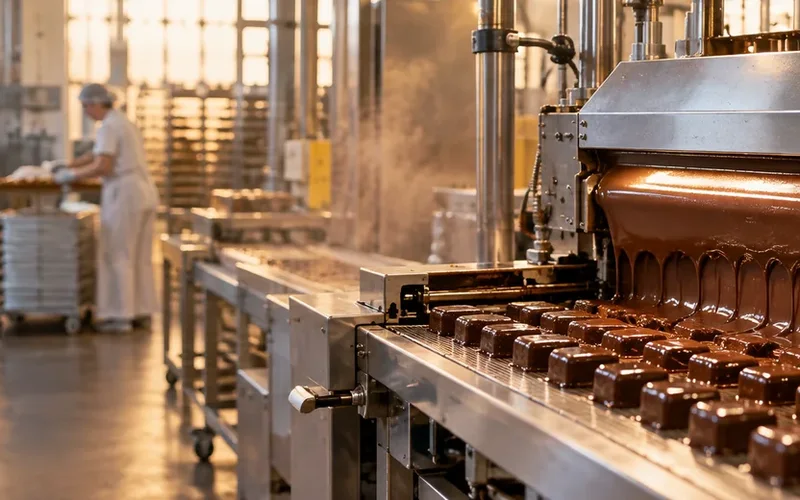
- Bakery & Confectionery Cooling - cooling tunnel and enrober cooling for baked and confectionery lines
- Meat & Seafood Processing - immersion chill tank water temperature for cold-chain compliance
What Makes Food & Beverage Cooling Different
Setpoint
Sub-40°F
Below What Water Can Do
Pasteurizer cooldown, cheese-vat jacketing and chill-tank duty routinely call for leaving fluid temperatures in the 28-38°F range - too cold for plain chilled water without risking ice on a coil. A properly mixed glycol loop is what gets a plant there without freezing a line.
Fluid
Food-Grade
Propylene, Not Ethylene
Anywhere the glycol loop runs near product-contact surfaces or a wash-down area, the fluid has to be food-grade propylene glycol, not the industrial ethylene mix used on a compressor or hydraulic loop elsewhere in the plant. Mixing the two on one site is a real, avoidable mistake.
Duty cycle
Batch, Not Steady
Sized For The Peak
A pasteurizer cooldown or a cheese-vat jacket doesn't pull a flat load all shift - it spikes hard for a window and idles the rest of the time. Sizing off an average load instead of the peak is the most common reason a food-plant chiller runs out of capacity on the busiest batch.
Wash-down
Sanitation-Ready
Built For The Environment
Process rooms get hosed down and CIP lines run hot caustic and acid rinses nearby. Piping, insulation jacketing and any indoor-mounted equipment need to tolerate that environment, not just the process fluid itself.
Sizing a Food & Beverage Glycol Loop
Three numbers get a quote moving fast: the peak heat load in tons, the leaving fluid temperature the process needs, and whether the unit will sit indoors near the process floor or outdoors on a pad. Everything else - glycol percentage, pump/reservoir sizing, indoor vs. outdoor cabinet construction - follows from those three.
Most single-line dairy or bakery duty fits a portable chiller through roughly 40 tons; a multi-line plant or a packaged central system running several process points at once typically lands in the 40 to 100 or 100 to 210 ton range. Above that, a modular or custom system is the right conversation to have with an application specialist rather than picking a model off a spec sheet.
Send Us
- Peak heat load (tons) or the process data to calculate it
- Required leaving fluid temperature
- Indoor or outdoor installation
- Available voltage
- Which application below matches your line
DIG DEEPER BY APPLICATION
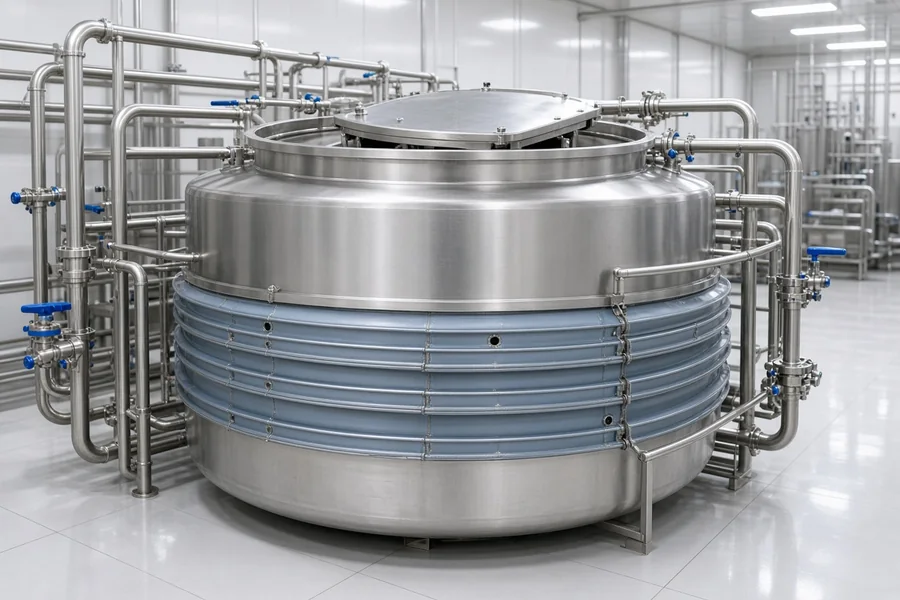
Dairy Processing & Storage
Pasteurizer cooldown, cheese-vat jacketing and cold storage holding temperature.
Learn More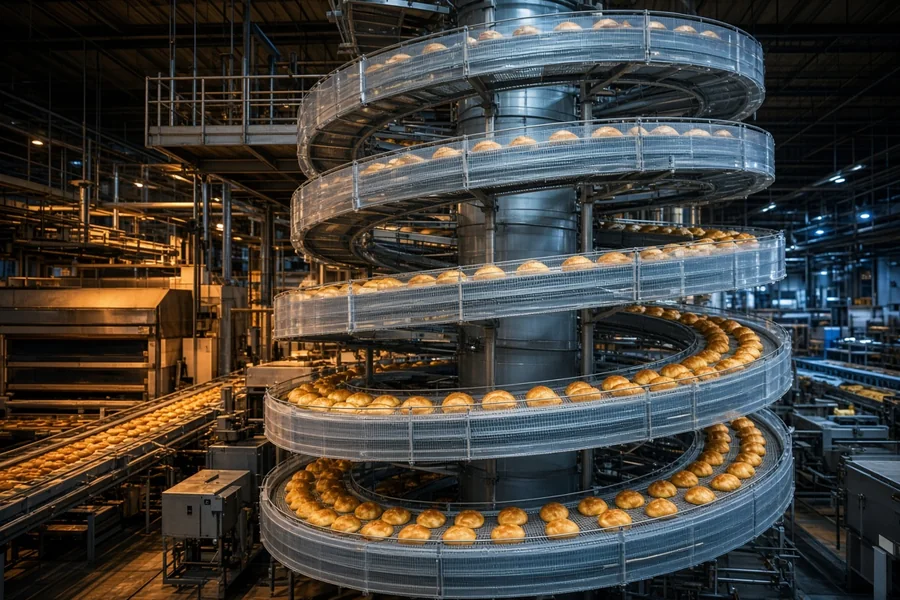
Bakery & Confectionery Cooling
Cooling tunnel and enrober cooling for baked and confectionery production lines.
Learn More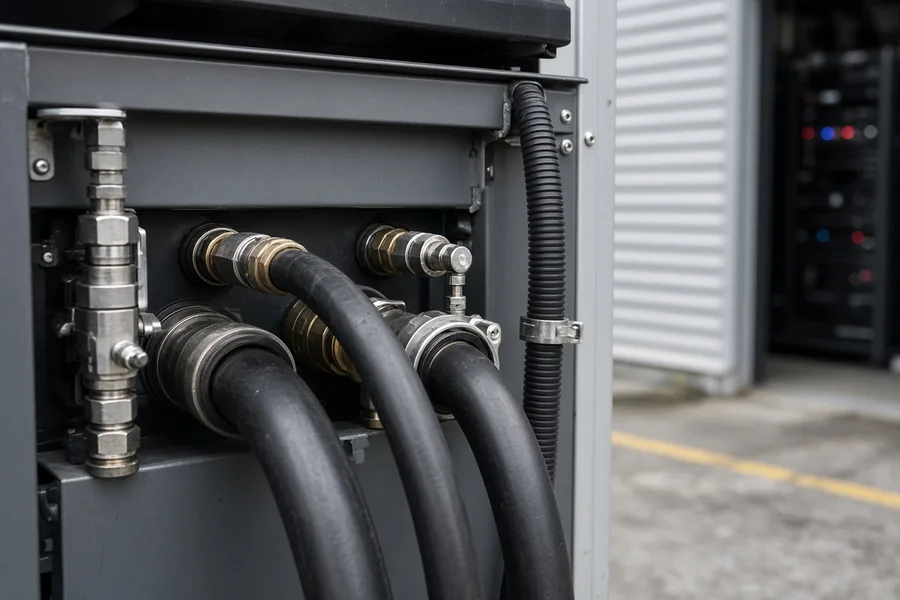
Meat & Seafood Processing
Immersion chill tank fluid temperature for cold-chain compliance from processing through packaging.
Learn More