1-805-484-2992
Quotes - Sizing - SalesGlycol Chillers by Capacity
Sized From Your Load, Setpoint and Site
A glycol chiller is chosen by four numbers before it is chosen by a model: the heat load in tons, the leaving fluid temperature, where the unit will sit and the power that reaches it. Every unit we list is rated at 50°F leaving fluid, and capacity falls with the setpoint - to about 0.60 of that rating at 30°F - so a brewery crashing at 28°F needs more nameplate than its load alone suggests. The five capacity ranges below divide the line so that a duty lands in exactly one of them.
- Under 5 tons: single-phase plug-in units to 1.5 tons, then three-phase portables to 4.9 tons, each with its own tank and pump.
- 5 to 40 tons: sixty-six units, indoor or outdoor packaged, air- or water-cooled - the widest choice of format in the line.
- 40 to 100 tons: central chillers with 340- or 1,200-gallon tanks, and chilling modules that add to an existing pump station.
- 100 to 210 tons: two- and three-zone plants to 180 tons indoors and 188 outdoors, sized for redundancy as much as for load.
- Over 210 tons: several units on one header, staged and rotated by a plant controller.
- Replacing a chiller? Look up the unit you run now by manufacturer and model, and we name its equivalent.
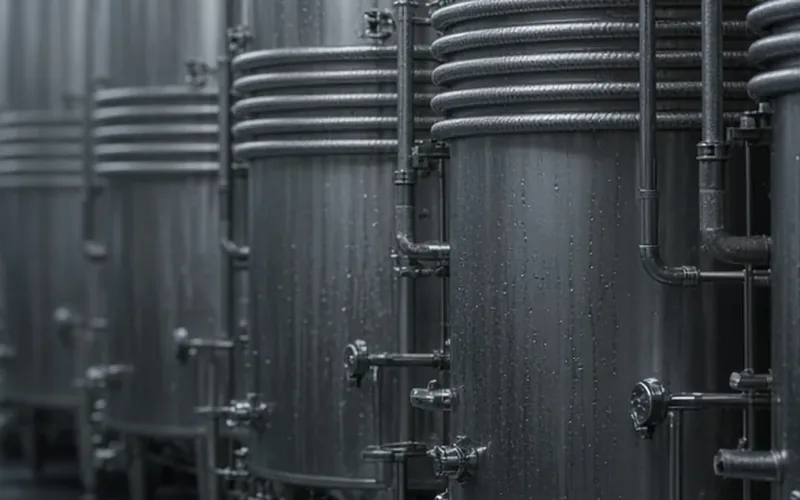
How to Size a Glycol Chiller
Tank volume, crash rate, setpoint and ambient, worked through in the order we ask about them on a call.
SELECT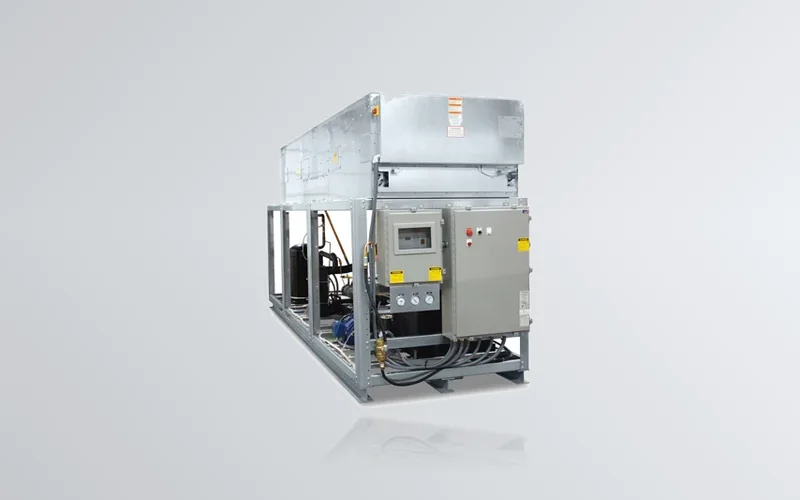
Indoor vs Outdoor Installation
Where the heat can go decides the format: a package on a pad, a remote condenser, or tower water.
SELECT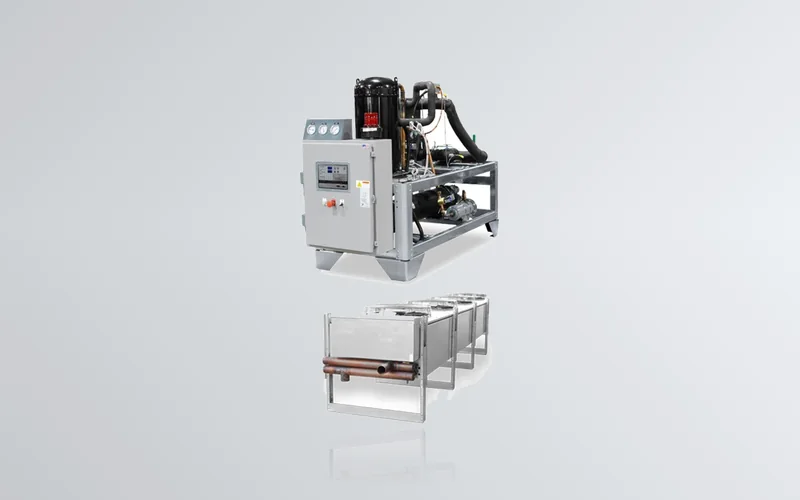
Find Your Match
Start from the model number on the chiller you run now, and we name the unit that replaces it.
SELECT
Air-cooled
- Rejects its heat to the air
- No tower or city water to run
- Remote condenser keeps the room cool
Water-cooled
- Rejects its heat to tower water
- Compact in a mechanical room
- Holds capacity on the hottest day
BEFORE YOU REQUEST A QUOTE
Five Numbers
Price a Chiller
Load in tons. It comes from tank volume, how fast the product has to come down and the warmest day the unit will see. If you have the load in BTU/hr, divide by 12,000.
Leaving fluid temperature. Anywhere from about 20°F to 80°F; a brewery crash loop sits near 25°F, mold and jacket cooling far warmer. Indoor or outdoor, air- or water-cooled. An air-cooled unit indoors adds its compressor heat to the room; a remote condenser sends it outdoors, a water-cooled unit sends it to the tower.
Glycol and voltage. Food-grade propylene or industrial ethylene and the mix you run, plus the supply at the pad - single-phase stops at 1.5 tons. Send those with your application, or email Sales@HeatX.com, and the quote comes back sized.
Call and talk it through with an engineer: 1-805-484-2992