
1-805-484-2992
Quotes - Sizing - SalesPlastics-Plant Chillers, Built to a Standard Pattern
Nine series, 135 published part numbers, from a quarter-ton bench unit to a 188-ton outdoor plant. Every one is listed here, with an alternate unit for each.
Temptek builds auxiliary equipment for plastics processing, and its chiller range reads like it: portable units that sit beside an injection press, central chillers that feed a header down a molding aisle, chilling modules that bolt onto an existing pump-tank station, and outdoor packaged units that take the whole refrigeration plant out of the building. The models are standardized, the ratings are all stated at the same point - 50°F leaving water with a 115°F condensing temperature, or 105°F on water-cooled units - and the part number tells you most of what the unit is before you open a spec sheet.
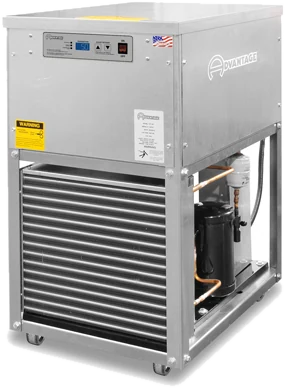
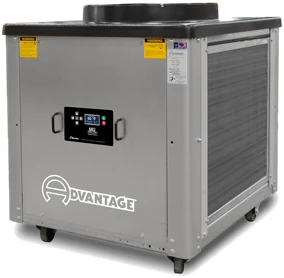
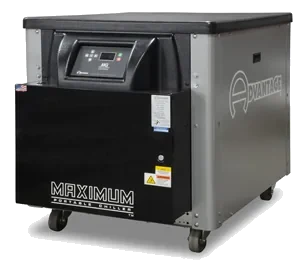
- Portable CF and CG units run from ¼ to 40 tons, with the tank, pump and controls in one cabinet on casters.
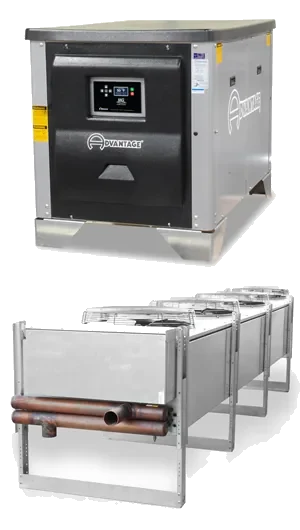
- CG-ARC is the same indoor chiller with its condenser moved outside through a pair of refrigerant lines.
- TTI central chillers carry two or three refrigeration zones, a baffled tank and separate process and evaporator pumps, 20 to 180 tons.
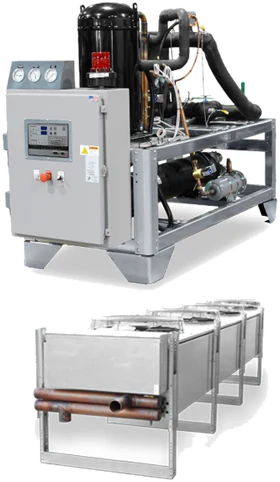
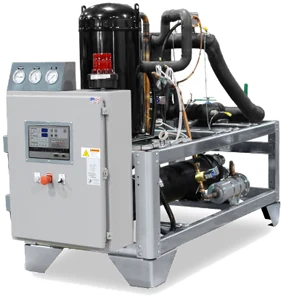
- MA and MW modules are the refrigeration section alone, for a plant that already has its tank and pumps.
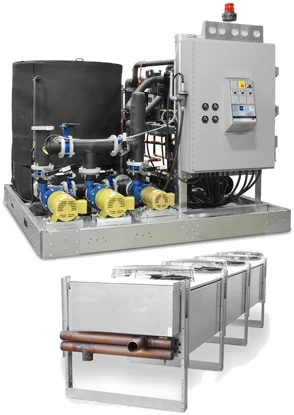
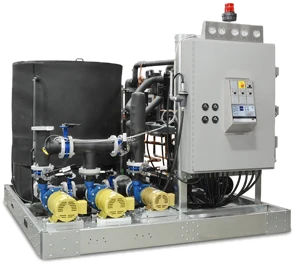
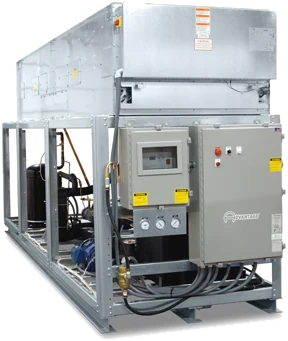
- TTOACS units put compressors, condenser, tank and pump on an outdoor pad, single-zone to 60 tons and dual-zone to about 190.
- Across the range, the rating point is 50°F; glycol duty below it needs the capacity multiplier, not the nameplate.
Reading a Temptek Part Number
The prefix names the family and the number is the nominal tonnage. CF is the fractional portable, CG and CGD the larger portables, TTI the central chiller, MA and MW the air- and water-cooled chilling modules, TTOACS the outdoor unit. A trailing A means air-cooled and W water-cooled; RC means a remote condenser. On the portables, the letters after the A describe the condenser air path: F is a single fan, FF a bank of smaller fans, B a centrifugal blower that can push against ductwork.
The suffix on the central units counts refrigeration zones. An MA or MW module ending -C has one refrigeration circuit, -CC two and -CCC three. A TTOACS number carries S for single-zone or D for dual-zone, the controller family (CG or MZC) and the number of process pumps. That matters on a replacement, because a dual-zone plant can keep running on one circuit and a single-zone plant cannot.
The nominal number is not always the capacity. Several larger models rate below the number in their name - an MA-150-RC-CCC is listed at 135 tons, a TTI-100A at 90 tons, a TTOACS-50S-CG-1P at 42.7 tons. When a Temptek unit is being replaced, size from the rated tons on its part-number page, or better, from the measured load, and not from the model number.

Choosing the Right Temptek Chiller
We supply Temptek chillers new, accross all nine series. Every part-number page also lists an alternate unit from our other chiller line: the same format (portable, central, module or outdoor), the same condenser type and the same capacity class, so the piping, the electrical service and the floor space carry over either way. Where the other line has no unit of the same size - the 35-ton single-zone modules, the 70-ton two-zone and 105-ton three-zone modules, and the largest outdoor units - the page points to the next size up.
Before quoting we ask for four things: the model and serial number from the nameplate, the leaving-fluid setpoint the process actually runs at, the glycol type and concentration, and the voltage. The setpoint is the one that changes the answer. On Temptek's published multipliers, a chiller rated 30 tons at 50°F delivers about 24 at 40°F, 18 at 30°F and 12 at 20°F, so a glycol process that was undersized on an old unit will stay undersized on a like-for-like swap.
Call and talk it through with an engineer: 1-805-484-2992
Before You Order
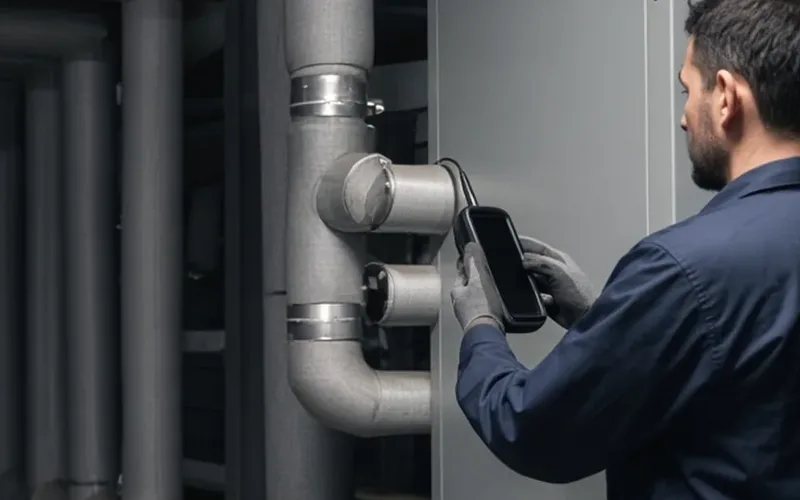
REPLACE • SIZING
Replacement Sizing Guide
Size the new unit from the load and the setpoint, not the old nameplate, and catch the undersized plant before it is copied.
+ Learn More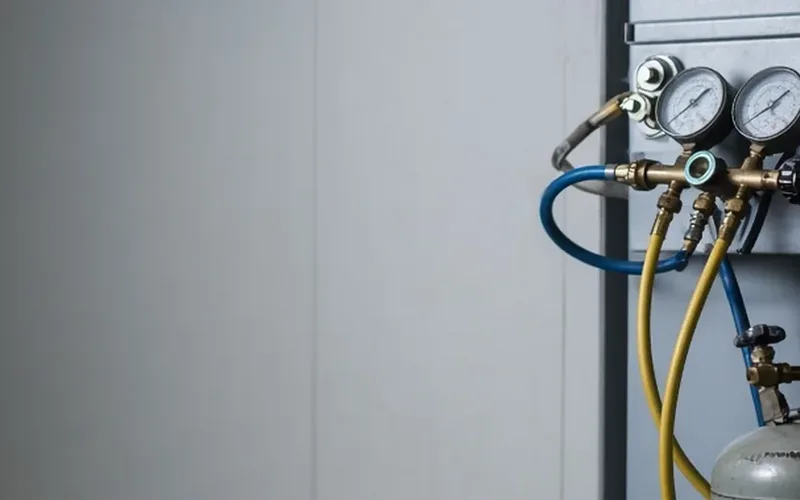
REPLACE • REFRIGERANT
Refrigerant Phase-Out
Units in the field may still run R-22 or R-410A. What the refrigerant change means for service, retrofit and replacement.
+ Learn More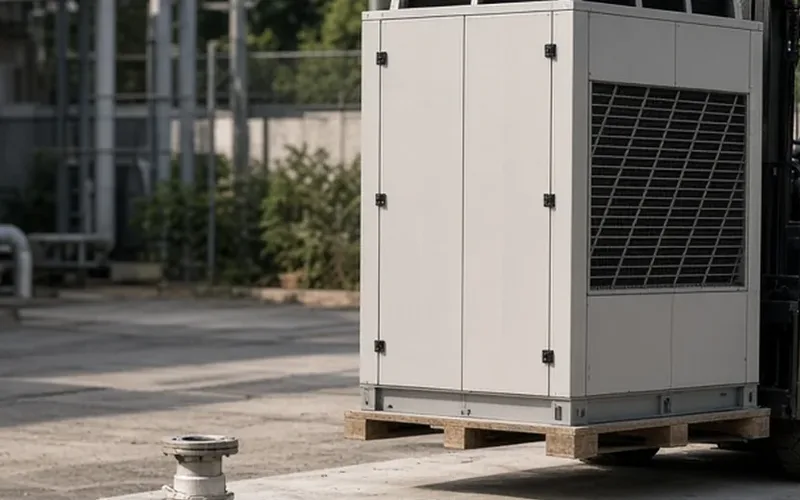
REPLACE • INSTALL
Swap-Out Checklist
Rigging, electrical, piping and start-up items to settle before the old chiller comes out of service.
+ Learn More